Manual vs. Hydraulic Cattle Chutes: Which Is Right for Your Operation?
Manual vs. Hydraulic Cattle Chutes: Which Is Right for Your Operation?
Choosing between a manual and hydraulic cattle chute is not simply a matter of choosing the more advanced option.
Both can provide effective cattle restraint. The better fit depends on how many cattle you handle, how often you work them, the jobs you perform, your available labor, your facilities, and your budget.
For some ranches, a well-built manual chute may provide everything needed. For others, the reduced physical effort and faster operation of hydraulics may make a significant difference.
Here's what to consider.
What Is the Difference?
The basic difference is how the chute's working functions are operated.
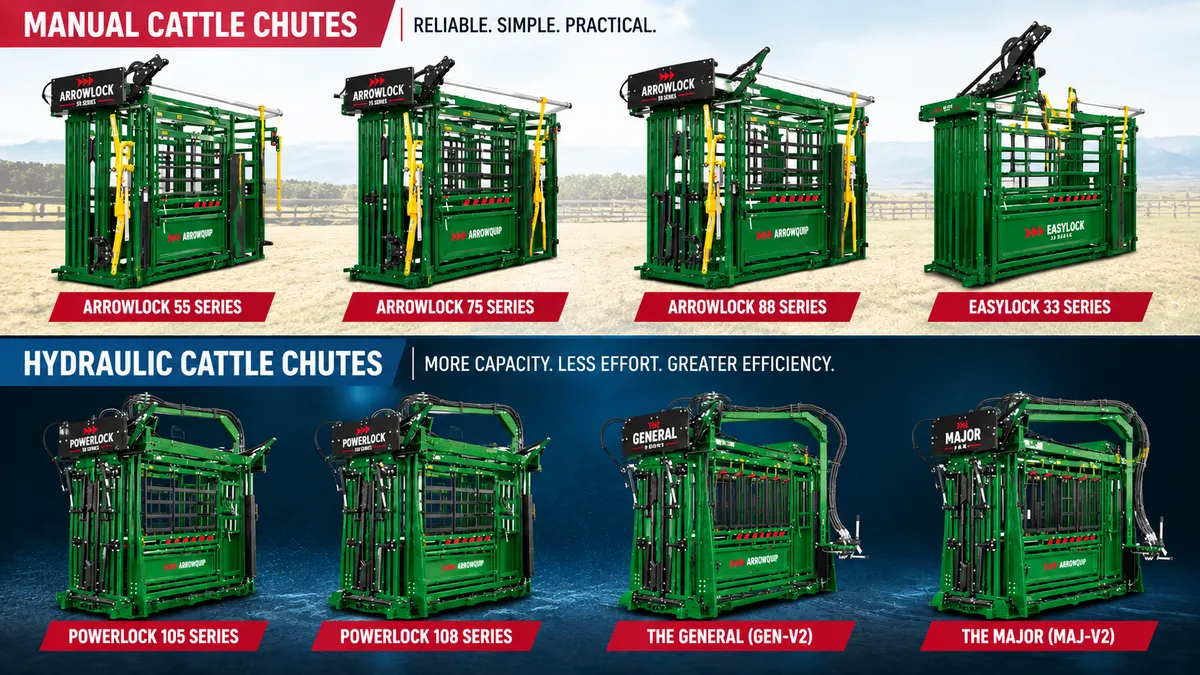
A manual cattle chute uses levers or mechanical controls operated by the handler. The operator provides the force needed to operate functions such as the squeeze and head gate.
Arrowquip explains the distinction similarly, with manual chutes using operator-powered levers and hydraulic chutes using hydraulic controls.
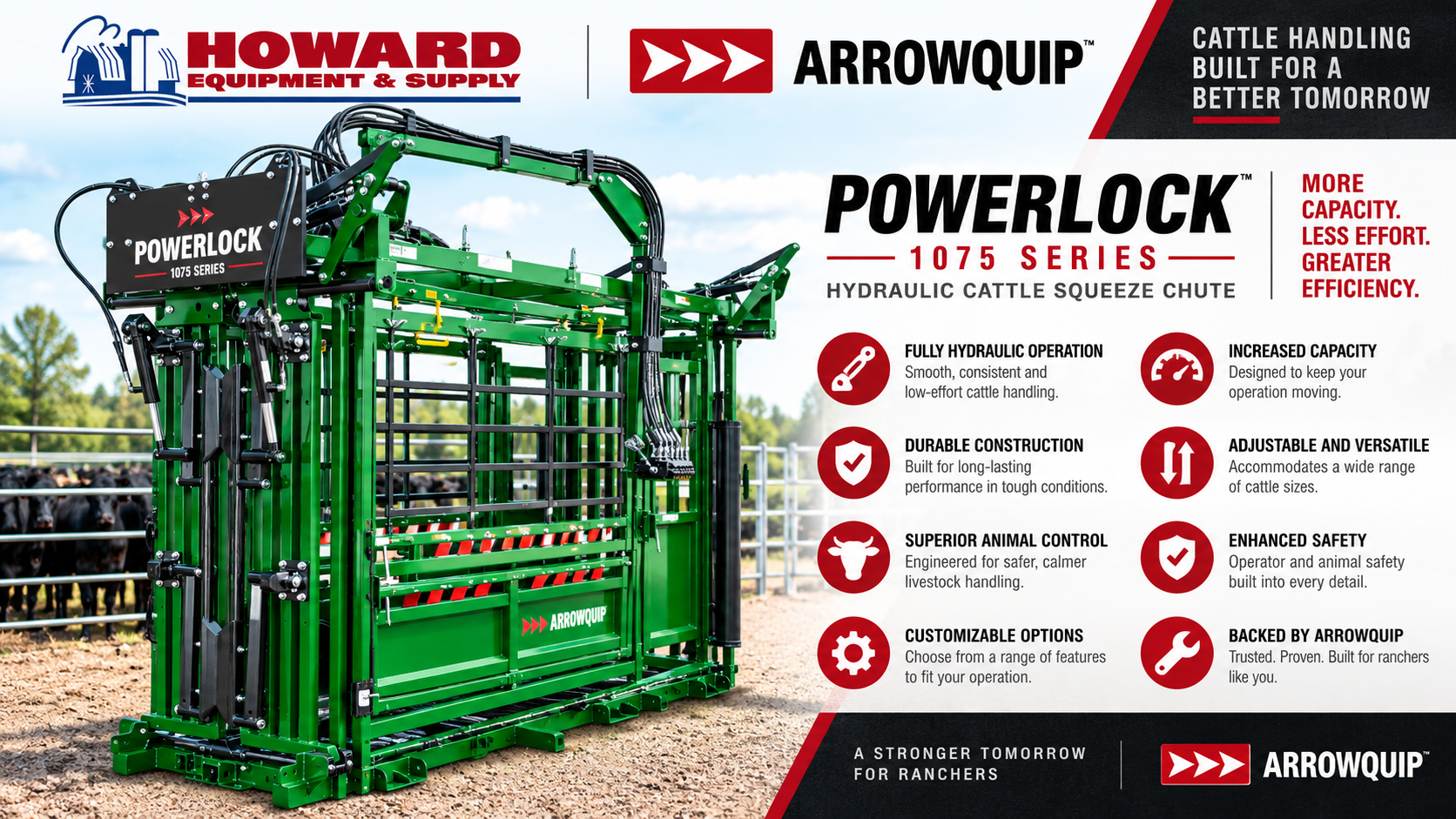
A hydraulic cattle chute uses hydraulic controls and cylinders to operate some or all of these functions. Depending on the chute, hydraulic controls may operate the head gate, squeeze, tail gate, and head restraint.
Arrowquip describes its manual chutes as lever-operated and its hydraulic chutes as using powered hydraulic controls.
The difference sounds simple, but it can have a noticeable effect on how cattle work gets done throughout the day.
1. Consider How Often You Work Cattle
Start with your actual workload.
If you work cattle periodically for vaccinations, tagging, treatment, pregnancy checking, or other routine jobs, a manual chute may provide the control you need without the additional cost and equipment associated with hydraulics.
For operations processing cattle frequently or handling larger numbers of animals, reducing the physical work required for each animal can become more important.
Arrowquip specifically identifies manual chutes as a practical option for small-to-mid-sized herds, while describing hydraulic systems as particularly useful for larger herds, frequent processing, and operations where efficiency is a priority.
The important question isn't simply "How many cattle do I own?"
It's:
How often am I putting cattle through the chute, and how much work is involved each time?
2. Manual Chutes: Simple, Practical Control
Manual chutes have been part of cattle operations for generations, and there's a reason they remain widely used.
The operator controls the chute mechanically, giving the handler direct control over the process.
A manual chute may make sense if you:
Handle cattle periodically rather than continuously
Have a small or medium-sized operation
Prefer straightforward mechanical operation
Want a lower initial equipment investment
Don't need powered operation for your normal workload
Have a setup where manual operation is practical
Modern manual chutes can also offer substantial improvements over older designs.
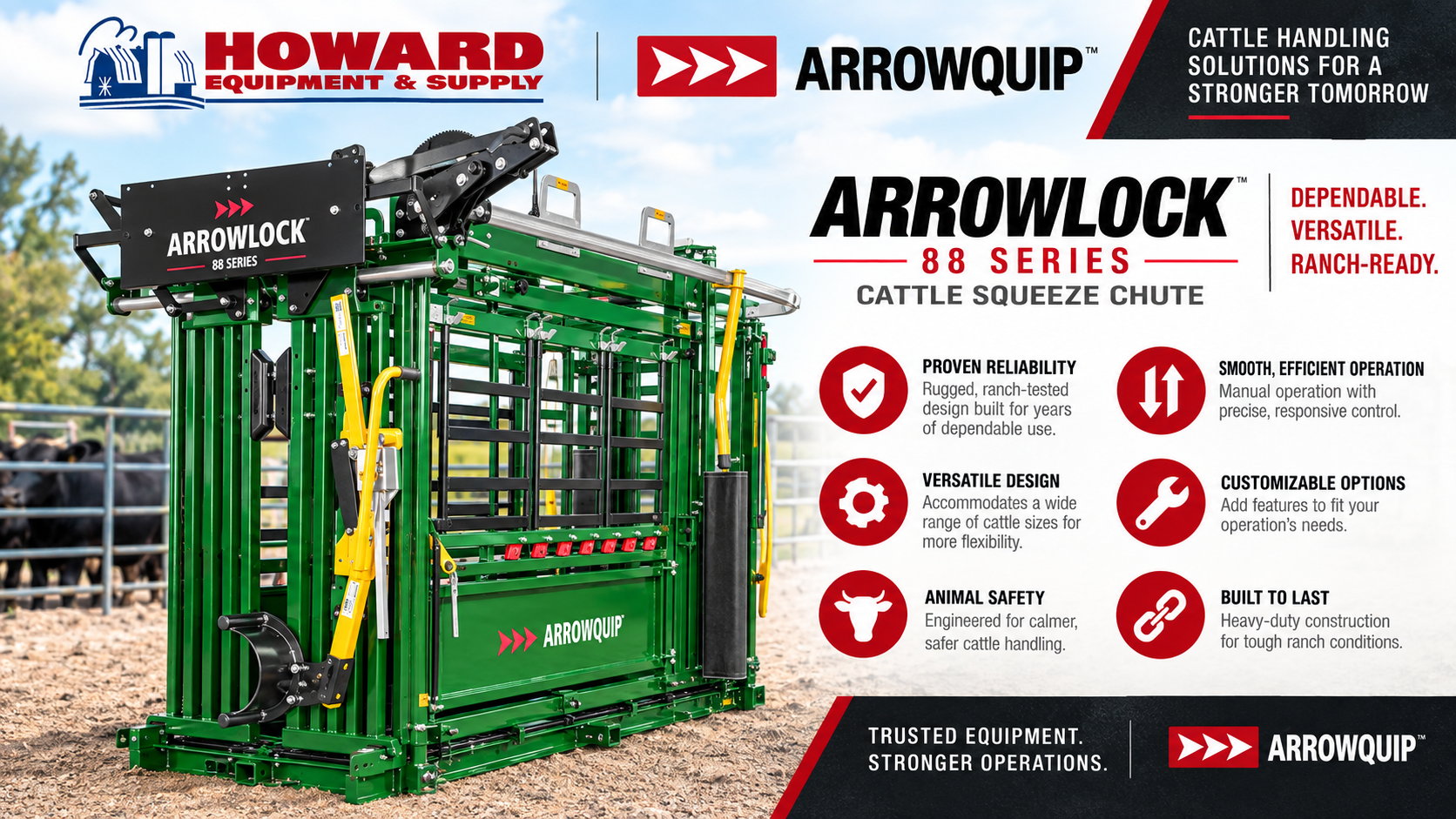
For example, Arrowquip's current manual lineup includes models designed around reducing operator effort while maintaining mechanical operation. Its Arrowlock 88 is specifically designed to provide increased holding force with less operator effort than earlier manual designs.
So manual does not necessarily mean basic or difficult to operate.
3. Hydraulic Chutes: Less Physical Effort
Hydraulic systems change how the operator interacts with the chute.
Instead of manually moving mechanical levers for the powered functions, the operator uses hydraulic controls.
This can reduce the physical effort required and can make repetitive cattle processing easier.
Arrowquip notes that hydraulic chutes provide faster operation with less physical effort and can be particularly useful for larger herds and frequent processing.
Hydraulic systems can also allow an operator to control multiple functions from a convenient control position, depending on the chute's design.
That can be especially useful when:
Cattle are processed frequently
One person needs to perform multiple tasks
The operation handles large numbers of animals
Long processing days are common
Reducing operator fatigue is important
Hydraulic chutes are not limited exclusively to large feedlots, either. Their value depends on the work being performed and whether the additional investment makes sense for the operation.
4. Think About Labor
This is one of the considerations that can easily be overlooked.
A chute isn't operated in isolation. People operate it.
If several experienced handlers are available, manual operation may fit naturally into the way your crew works.
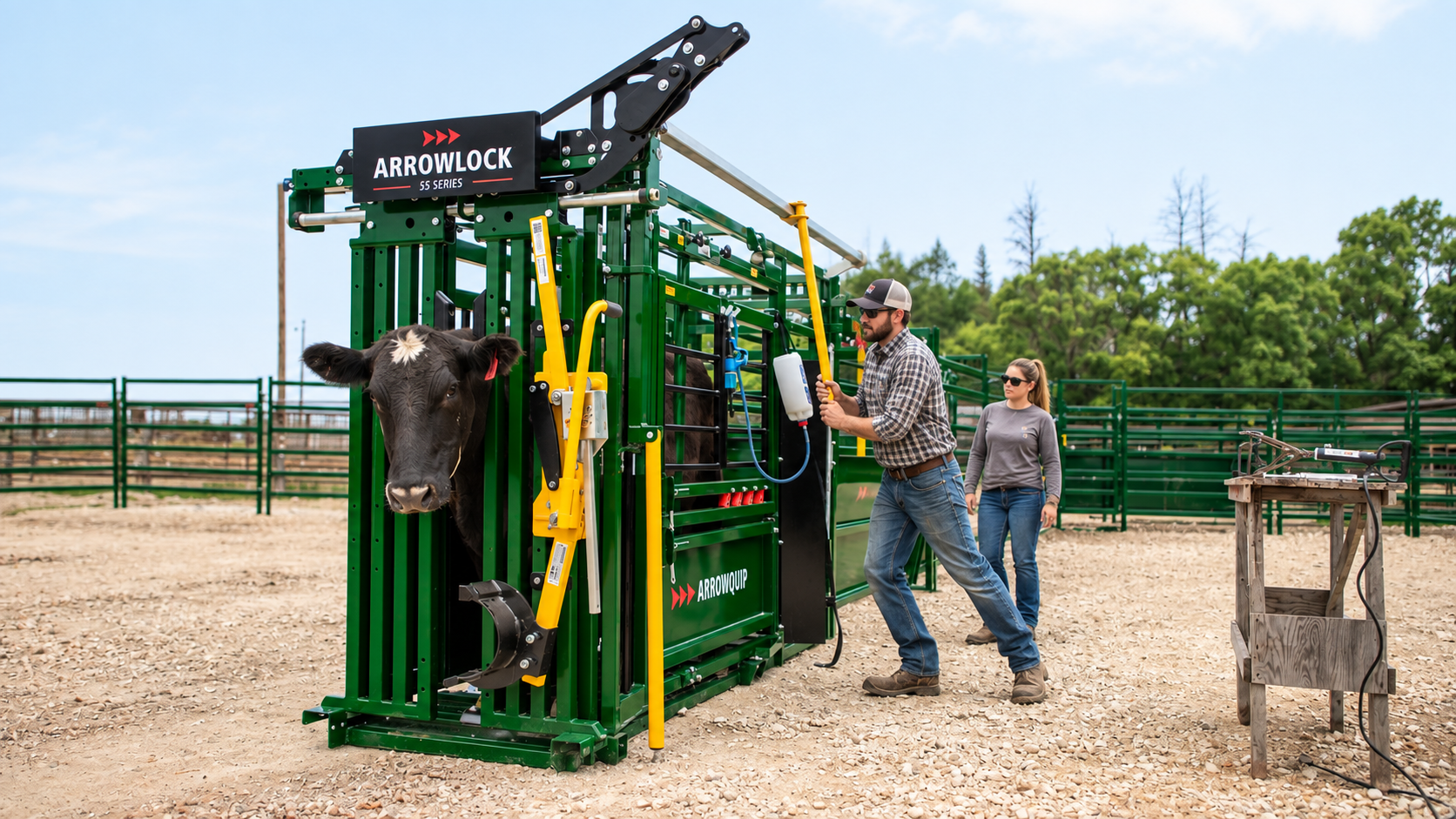
But if you're regularly working cattle with a small crew, or sometimes by yourself, the amount of physical work required from the operator becomes more important.
Hydraulic controls can reduce the physical effort involved in operating the chute and may allow the operator to focus more of their attention on the animal and the task being performed.
That doesn't mean hydraulics eliminate the need for good cattle-handling practices.
They don't.
Good facility design, proper restraint, calm handling, and understanding cattle behavior remain important regardless of the type of chute you choose. Oklahoma State University Extension emphasizes that cattle should be worked slowly and quietly and that workers need to understand pinch points and proper restraint procedures around squeeze chutes.
5. Don't Confuse "Hydraulic" With "Safer"
This is an important distinction.
A hydraulic chute is not automatically safer simply because it uses hydraulics.
The design of the equipment and the way it is operated matter.
A hydraulic chute is not automatically safer simply because it uses hydraulics. Chute design, proper restraint, operator positioning, and awareness of pinch points all matter. Oklahoma State University Extension emphasizes the importance of proper facility design, operation, and worker awareness when handling cattle.
So when comparing manual and hydraulic equipment, don't ask only:
"Which one is safer?"
Ask:
"Which system is properly designed, properly adjusted, and appropriate for the cattle and work I am doing?"
6. Consider Your Cattle and the Jobs You Perform
Your cattle handling needs should influence the decision.
A chute may be used for:
Vaccinations
Tagging
Treatment
Pregnancy checking
Artificial insemination
Weighing
Hoof work
Other veterinary or management procedures
A squeeze chute provides greater control of the animal's body than a head gate alone, which can be important when performing procedures that require the animal to remain relatively still.
For reproductive work, for example, Missouri Extension notes that a squeeze chute can be preferred because it limits cattle movement during artificial insemination.
This is why the decision shouldn't stop at manual vs. hydraulic.
You should also look at:
Access. Restraint. Visibility. Adjustability. And the specific work you need to perform.
7. What About Maintenance?
This is another area where the two systems differ.
A manual chute relies primarily on mechanical components and doesn't require a hydraulic power system.
Hydraulic equipment adds additional components such as hydraulic cylinders, hoses, controls, and a power source.
That doesn't necessarily make hydraulic equipment a poor choice. It simply means there are additional systems that need to be maintained.
Arrowquip's Owner's Hub, for example, provides product manuals and maintenance resources for both its manual and hydraulic chute lines.
When comparing equipment, ask about:
Routine maintenance
Replacement parts
Service availability
Hydraulic components
Warranty
Long-term support
The chute that works well for years is more valuable than the chute that simply looks good on purchase day.
8. What About Cost?
Generally, manual chutes have a lower initial investment than comparable hydraulic systems.
Hydraulic equipment adds the cost of the hydraulic system and its power source, so the initial investment is typically higher.
But purchase price should not be the only number you consider.
Think about the total value of the equipment over the years you expect to use it.
If your operation processes cattle frequently, the reduced physical effort and potential time savings of hydraulics may justify the additional investment.
If you only work cattle periodically, the additional investment may not provide the same value for your operation.
Arrowquip itself describes manual chutes as a more cost-effective option for smaller operations, while identifying efficiency and reduced labor as major advantages of hydraulic systems.
9. Don't Forget the Rest of the Handling System
Even the best chute cannot compensate for a poorly designed handling system.
The chute is only one part of the overall handling system.
A complete cattle-handling system can include:
Holding pens → crowding area → working alley → squeeze chute → sorting/loadout areas
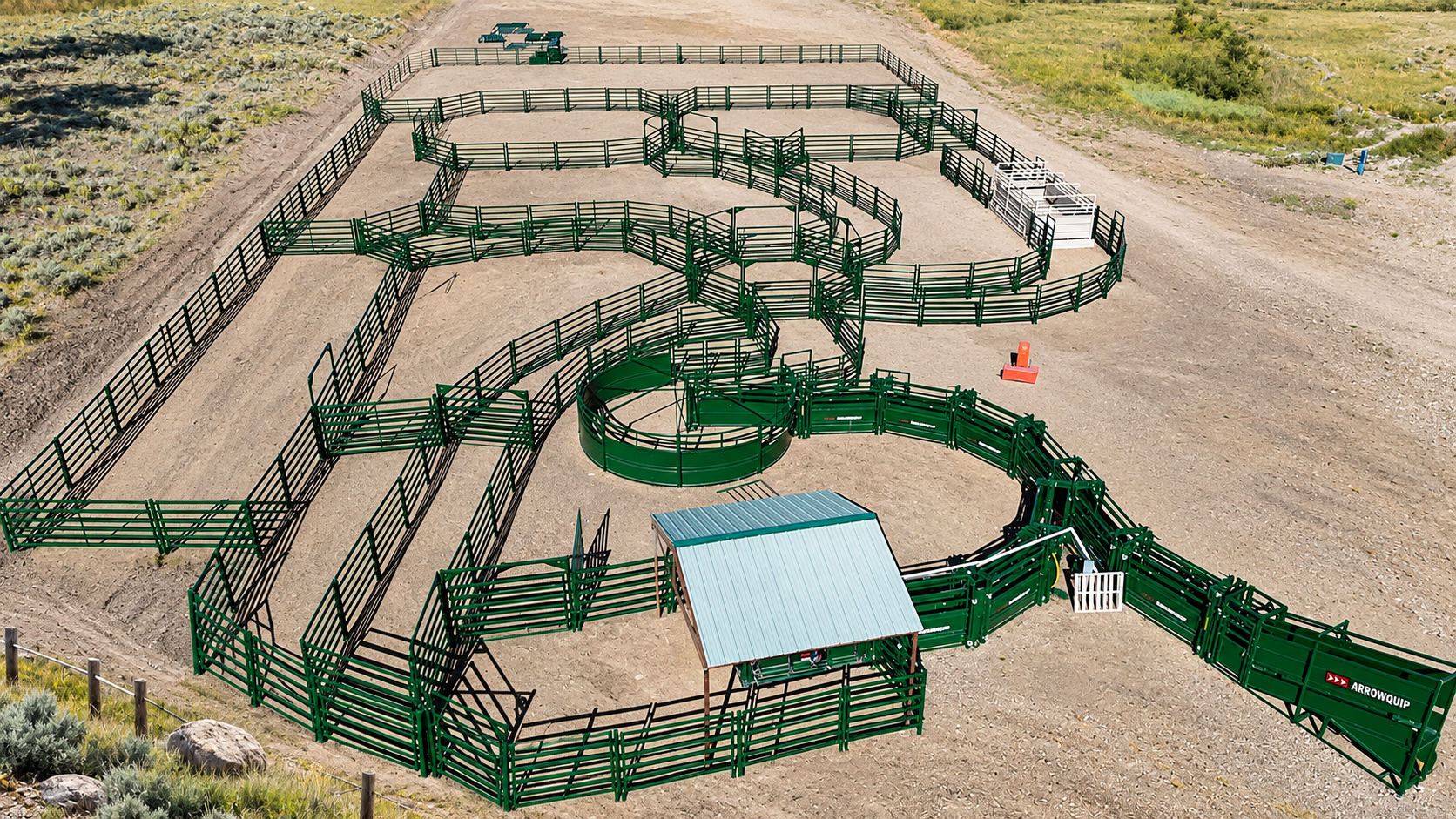
Penn State Extension describes a well-designed cattle handling system as incorporating components such as holding or crowding areas, a working alley or squeeze chute with a head catch, and, depending on the operation, sorting and loadout areas.
Cattle flow into the chute matters.
The approach to the chute matters.
The working alley matters.
And the way handlers interact with the cattle matters.
A good chute placed into a poorly designed system may not perform as well as expected.
Manual vs. Hydraulic: A Simple Comparison
Consideration | Manual Chute | Hydraulic Chute |
|---|---|---|
Operation | Mechanical levers/controls | Hydraulic controls |
Operator effort | More physical effort | Less physical effort |
Initial investment | Generally lower | Generally higher |
Power source | Not required for basic operation | Required for hydraulic operation |
Frequent processing | Can work well | Particularly useful |
Larger operations | Can be suitable depending on workload | Often attractive for higher-volume work |
Maintenance | Primarily mechanical | Mechanical + hydraulic system |
Portability | Many options available | Portable hydraulic options also available |
Best fit | Depends on workload and operation | Depends on workload and operation |
There isn't a universal winner.
The right choice depends on what you need the chute to do.
So, Which One Should You Choose?
Instead of asking:
"Is a manual or hydraulic chute better?"
A better question is:
"Which one makes the most sense for the way we work cattle?"
A manual chute may be a practical fit when you have a smaller operation, handle cattle periodically, and prefer straightforward mechanical operation.
A hydraulic chute may make more sense when cattle are processed frequently, labor is limited, physical effort is a concern, or the operation needs faster and more convenient control.
And there are situations in between.
Your herd size is only one part of the decision.
Your workload, facilities, labor, cattle temperament, handling procedures, maintenance expectations, and budget all deserve consideration.
Talk With Howard Equipment & Supply
At Howard Equipment & Supply, we carry both manual and hydraulic cattle-handling solutions, including Arrowquip's Arrowlock and Powerlock lines as well as other cattle-handling equipment.
Our goal isn't to put you into the most expensive chute.
It's to help you find equipment that makes sense for the way you actually work.
If you're considering replacing your current chute or building a new cattle-handling system, tell us about your operation, what you're currently using, and what you want to accomplish.
We're happy to talk through the options with you.
Howard Equipment & Supply
📞 (208) 357-3200
📱 (208) 251-2123
✉️ [email protected]
Serving Agriculture Since 1965
Sources & Additional Information
Alabama Cooperative Extension – Planning & Constructing Handling Facilities & Equipment